Wildlife North America . com North American Animals - mamals, birds, reptiles, insects |
Great Blue Heron (Ardea herodias)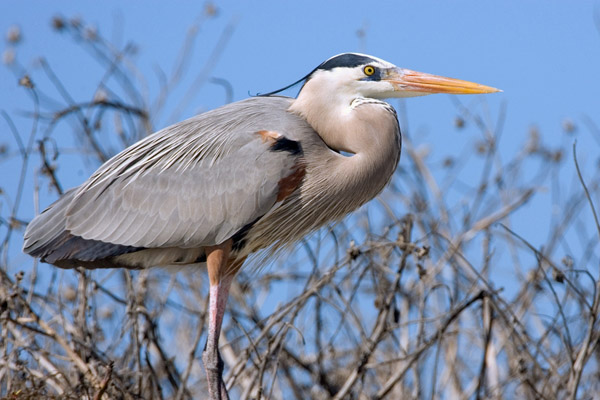
Great Blue Heron, Mustang Island Beach Near Port Aransas, Texas Photograph by Alan And Elaine Wilson. Some rights reserved. (view image details) 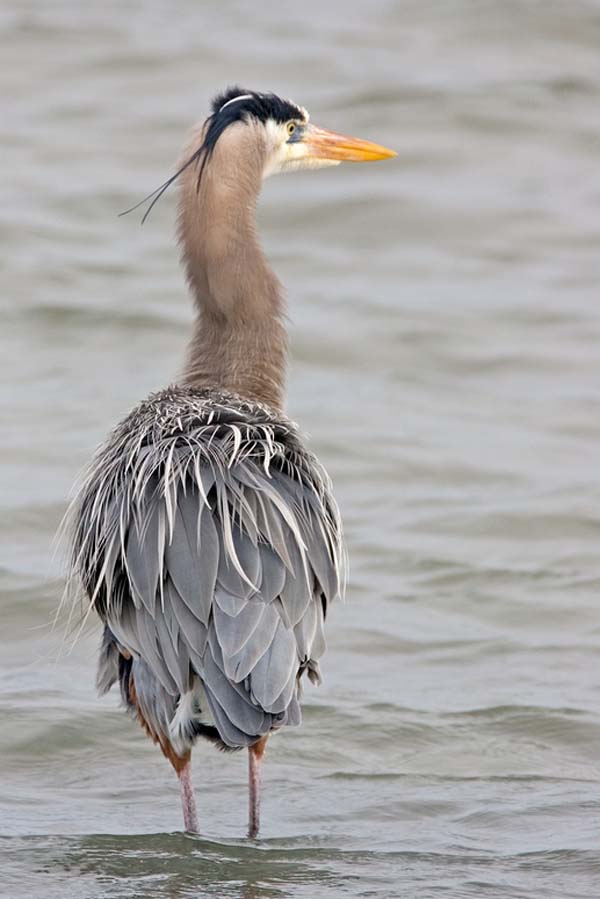
Great Blue Heron, Fishing Pier, Goose Island State Park, Texas Photograph by Alan And Elaine Wilson. Some rights reserved. (view image details) 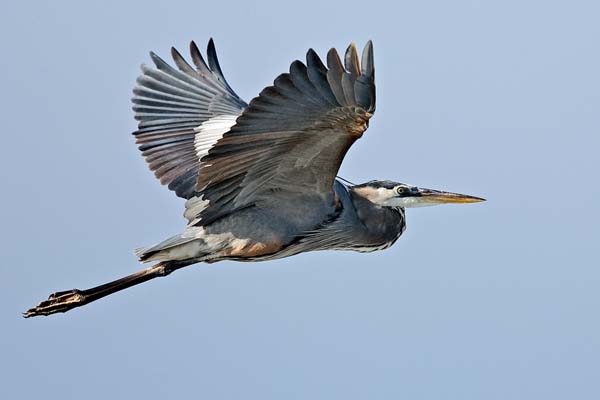
Great Blue Heron, Laguna Madre Nature Trail, South Padre Island, Texas Photograph by Alan And Elaine Wilson. Some rights reserved. (view image details)
GREAT BLUE HERON FACTS
DescriptionThe Great Blue Heron is the largest North American heron. It is blue-gray heron with a reddish gray neck with black and white streaks down the front. The thighs are brown. The face is white with long black plumes on the head. The bill is yellow (orange at the start of the breeding season), and the legs are gray (orange in the breeding season). Immature birds are duller with a dark gray crown, no plumes, and dull gray-yellow bill. Size length 91cm - 137cm, wingspan 180cm. Weight of 2.2kg - 3.6kg Environment fresh and saltwater marshes, mangrove swamps, flooded meadows, lake edges, shorelines Food mainly small fish, also shellfish, insects, rodents, amphibians, reptiles, and small birds. Breeding Nests in trees or bushes near to lakes or other wetlands. Nests in colonies with 5 – 500 nests per colony. They build a bulky stick nest. Female lays three to six pale blue eggs which hatch after about 28 days. Range The Great Blue Heron is found throughout most of North America, from south eastern Alaska, British Columbia, Quebec, and Nova Scotia, through most of the United States to Mexico and northern South America. Classification
Relatives in same Genus Great Egret (A. alba) Home | Mammals | Reptiles | Birds | Insects | Privacy Policy | Disclaimer | Contact Us |