Wildlife North America . com North American Animals - mamals, birds, reptiles, insects |
Least Sandpiper (Calidris minutilla)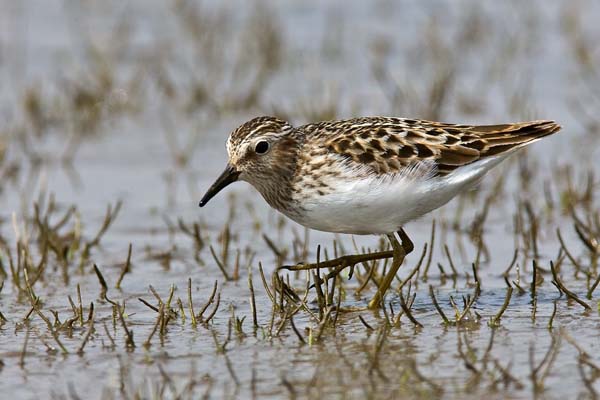
Least Sandpiper, Grant Narrows Regional Park, Pitt-Addington Marsh Wildlife Management Area, Pitt Meadows, British Columbia Photograph by Alan And Elaine Wilson. Some rights reserved. (view image details)
LEAST SANDPIPER FACTS
DescriptionThe Least Sandpiper is a small sandpiper with short neck and longish black bill. The back is reddish brown with black markings, and two thin white lines down the back. The underside is white. The legs are fairly long and yellow. There is some black feathers on centre of the rump and tail. Males and females are similar. Juvenile birds are similar to adults, with more prominent pattern on back. Size length 13cm - 15cm. Wingspan 27cm Environment mossy tundra, grassy tundra, wet grassland, mudflats, shores of lakes Food small crustaceans, insects, snails. Breeding The nests on the ground near water on tundra or bogs. The nest is a shallow scrape in the ground lined with grass and moss. Lays four eggs. Range The Least Sandpiper breeds throughout Alaska and northern parts of Canada to Newfoundland. Winters in southern United States from Oregon to Virginia and south to central South America. Classification
Relatives in same Genus Sanderling (C. alba) Dunlin (C. alpina) Pectoral Sandpiper (C. melanotos) Rock Sandpiper (C. ptilocnemis) Home | Mammals | Reptiles | Birds | Insects | Privacy Policy | Disclaimer | Contact Us |