Wildlife North America . com North American Animals - mamals, birds, reptiles, insects |
Eastern Cottontail (Sylvilagus floridanus)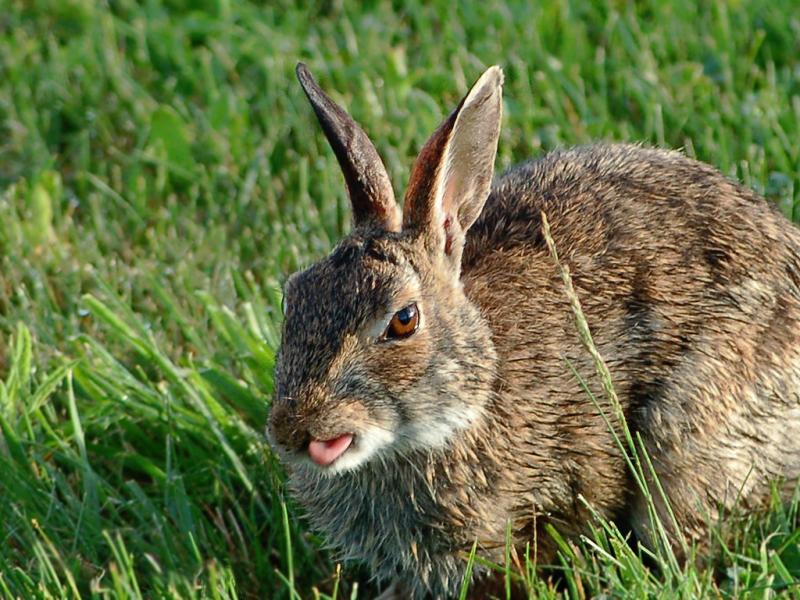
Eastern Cottontail photographed near the Visitors Center at the Sachuest Point NWR, Middletown, Rhode Island. Photograph by Tom McCarthy (cruadinx). Some rights reserved. (view image details) 
Eastern Cottontail, Ocala National Forest Photograph copyright: Chad Anderson - all rights reserved. Used with permission. (view image details)
EASTERN COTTONTAIL FACTS
DescriptionEastern cottontails are prolific rabbits and can have up to seven litters a year. They have dense gray fur with longer black-tipped outer hairs (guard hairs). It has a prominent reddish patch on the neck. The underside of the body and tail is white. The summer coat is shorter and browner than the winter coat. During September to October, the cottontail molts and changes to the grayer winter fur. The eyes are quite large. Other Names Florida Cottontail Size Length 40 - 48cm. Weight 0.8 - 1.5kg Environment meadows, orchards, farmlands, hedgerows, shrubby woodland. Food The diet is vegetarian and includes grasses, wild strawberry, clover, garden vegetables. In the winter when food is scarce, it eats twigs, bark and buds Breeding Females give birth to litters of up to 12 young (average 5) after a gestation period of 25 - 28 days. An average of 3 - 4 litters may be born in a year. The young are weaned after 16 - 22 days. Range southern Manitoba and Quebec to Central and northwestern South America. In the United States, from the east to the Great Plains of the west Classification
Relatives in same Genus Swamp Rabbit (S. aquaticus) Desert Cottontail (S. audubonii) Brush Rabbit (S. bachmani) Mountain Cottontail (S. nuttallii) Appalachian Cottontail (S. obscurus) Marsh Rabbit (S. palustris) New England Cottontail (S. transitionalis) Home | Mammals | Reptiles | Birds | Insects | Privacy Policy | Disclaimer | Contact Us |