Wildlife North America . com North American Animals - mamals, birds, reptiles, insects |
Elk (Cervus elaphus)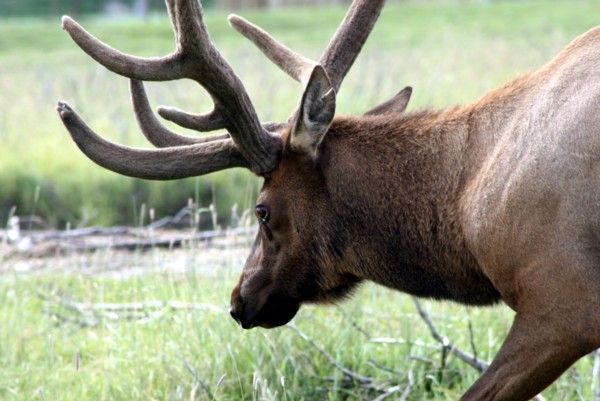
Elk, Portage Alaska Photograph copyright: Shellie Raney - all rights reserved. Used with permission. (view image details) 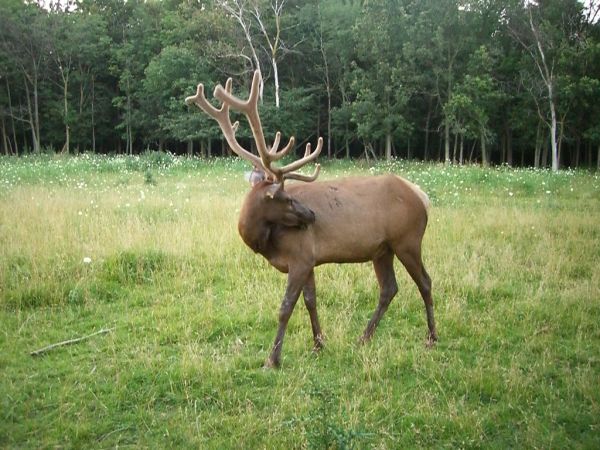
Elk, Elk Grove Village Photograph by Kim Scarborough. Some rights reserved. (view image details) 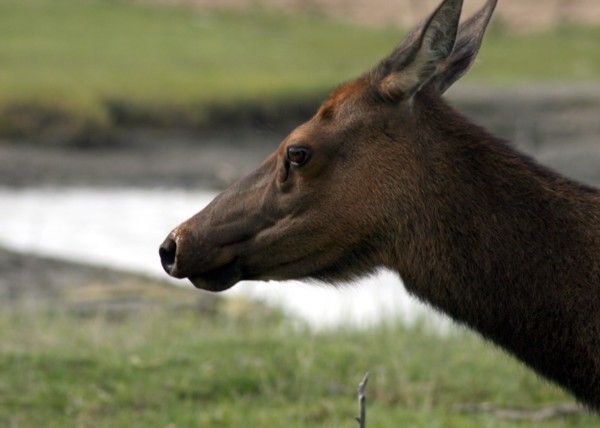
Doe Elk, Alaska Photograph copyright: Shellie Raney - all rights reserved. Used with permission. (view image details) 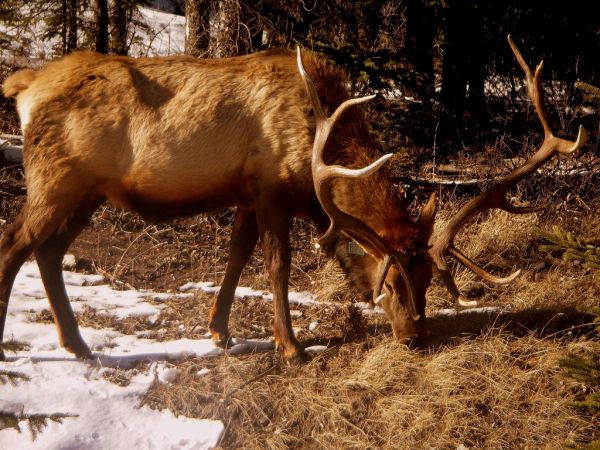
Bull Elk, taken on the Bow Valley parkway near Johnstone Canyon, Banff, Alberta, Canada Photograph by James Anderson. Some rights reserved. (view image details)
ELK FACTS
DescriptionElk are social deer that live in herds of up to 400. The fur is dark brown in winter and tan in summer. The back and sides are lighter than the head and neck. The rump is buff colored. Males have a shaggy mane on neck, and widely branched antlers. Other Names Red Deer Size Length: Males 2.4m; females; 2.2m. Antlers can grow to span 1.5 m from tip to tip. Environment open woodlands, coniferous swamps, aspen-hardwood forests, and coniferous-hardwood forests. They are not found in dense unbroken forests. Food grasses, sedges, and herbaceous plants in summer and woody growth from trees and shrubs in the winter Breeding A single calf is born (rarely twins) after gestation of 240 and 260 days. At birth, calves weigh around 15 to 16 kg and have creamy spots on their back and sides. The calf stays with mother for first two weeks or so. At 16 days the calf is able to join the herd, and is weaned after 60 days. Range large populations are found only in the western United States from Canada through the Eastern Rockies to New Mexico, and in a small region of Michigan. Notes In some places Elk are farmed for Elk meat and other elk products. Classification
Home | Mammals | Reptiles | Birds | Insects | Privacy Policy | Disclaimer | Contact Us |