Wildlife North America . com North American Animals - mamals, birds, reptiles, insects |
False Killer Whale (Pseudorca crassidens)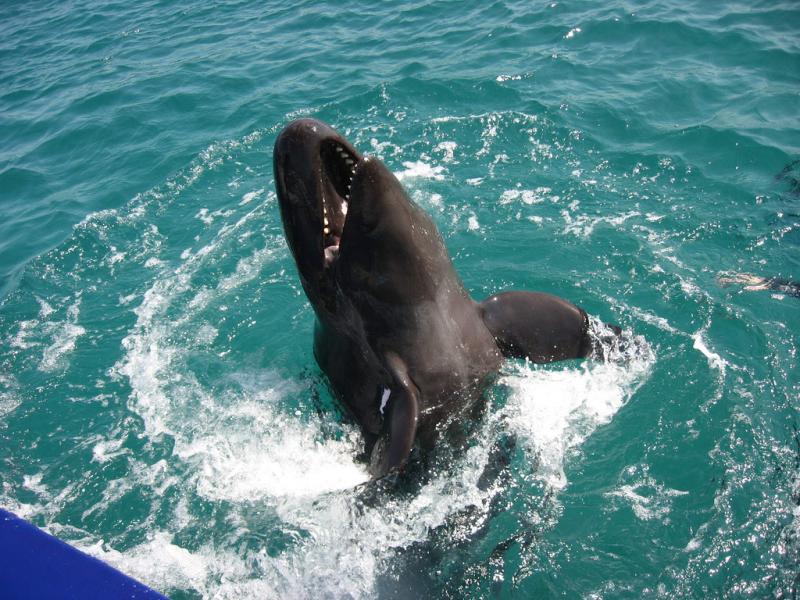
False Killer Whale, photographed in Olongapo City, Central Luzon, Philippines. Photograph by M. Kimmig. Some rights reserved. (view image details) 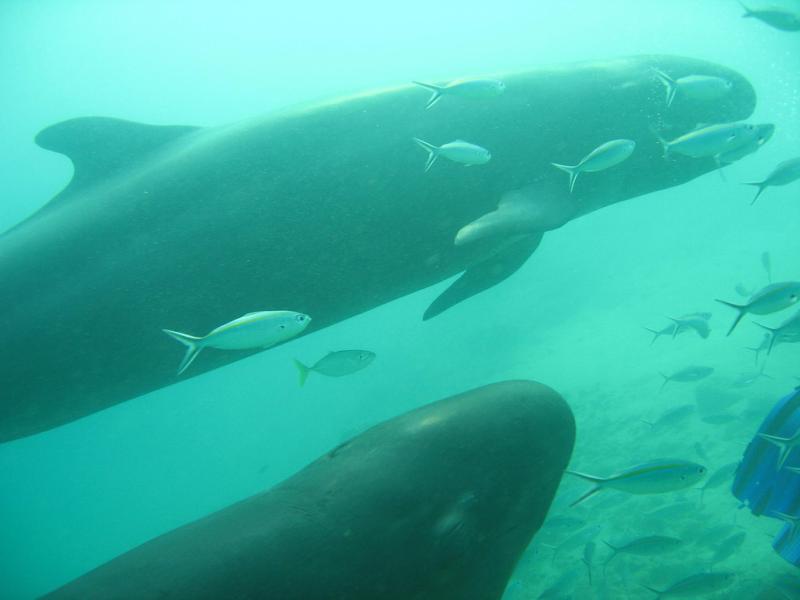
False Killer Whale, photographed in Olongapo City, Central Luzon, Philippines. Photograph by M. Kimmig. Some rights reserved. (view image details) 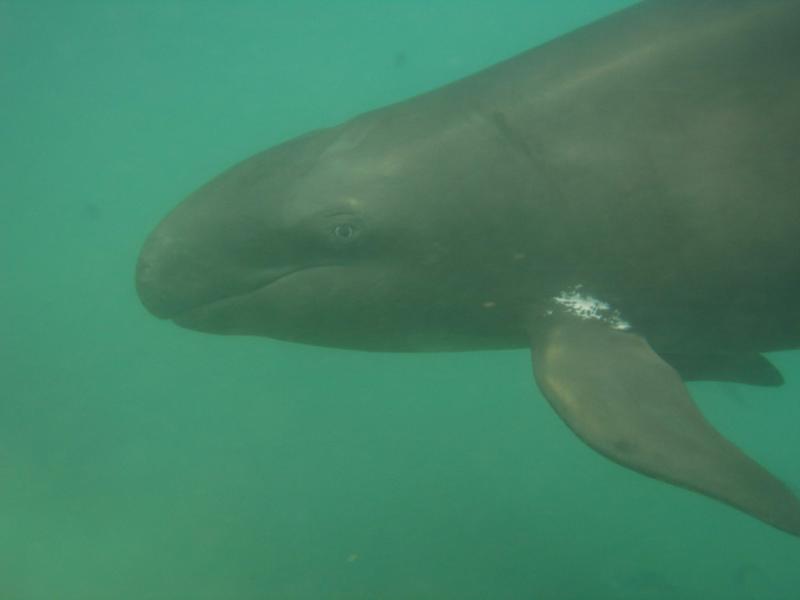
False Killer Whale, photographed in Olongapo City, Central Luzon, Philippines. Photograph by M. Kimmig. Some rights reserved. (view image details)
FALSE KILLER WHALE FACTS
DescriptionThe False Killer Whale is a large black or dark gray dolphin with pale gray underside. The body is long with a narrow dorsal fin with rounded tip, and long pointed flippers. The snout is bulbous. There is a pale ring around the eye. It has similar shape to a Killer Whale hence the common name. It swims in schools of 10 to 100 animals and is often seen with other cetaceans, especially Bottlenose Dolphins. Other Names Orca Falsa, Blackfish Size Maximum length: 5m - 6m. Weight: 1300 kg Environment ocean waters ranging in temperature from 9 to 31 degrees C Food squid and fish Breeding A single calf is born after a gestation period of 15 months. The calf is weaned after about 24 months. False Killer Whales can live up to 60 years. Range all tropical, subtropical, and warm temperate seas Notes The False Killer Whale is one of the most common whales involved in mass strandings. The largest documented case involved 835 beached animals. Classification
Home | Mammals | Reptiles | Birds | Insects | Privacy Policy | Disclaimer | Contact Us |