Wildlife North America . com North American Animals - mamals, birds, reptiles, insects |
Gray Whale (Eschrichtius robustus)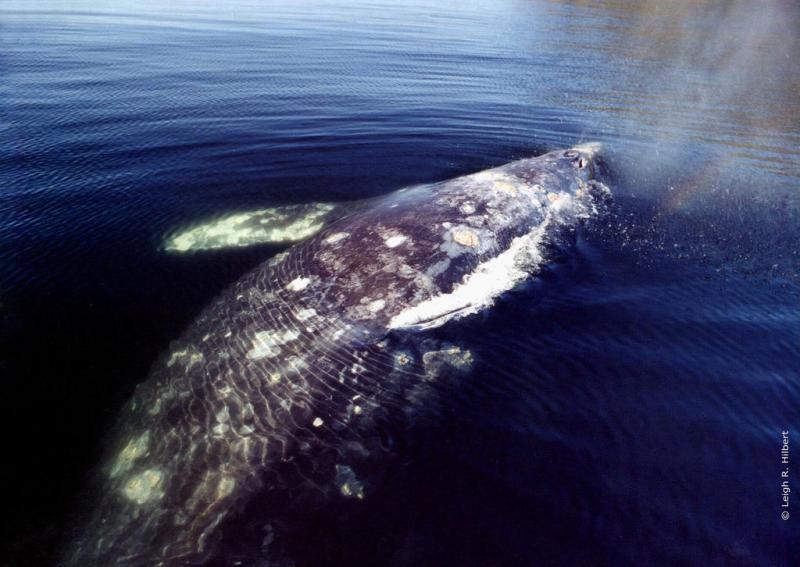
Gray Whale exhaling air from her two blowholes. Leigh has an interesting story about this encounter on his Flickr page The story of touching a whale in the wild. Photograph by Leigh R Hilbert. Some rights reserved. (view image details) 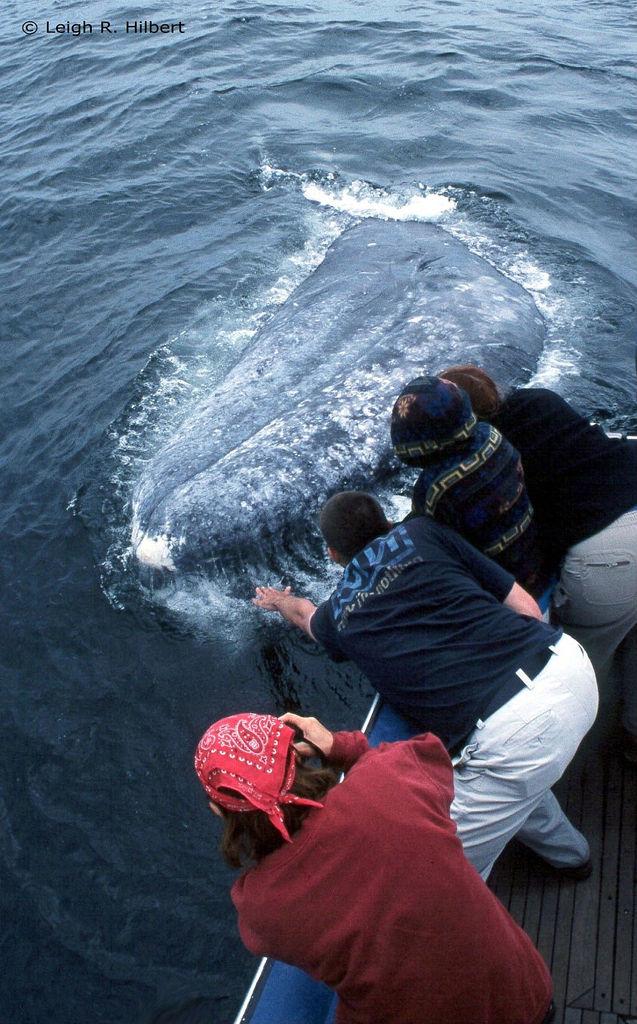
A close encounter with a Gray Whale. Photograph by Leigh R Hilbert. Some rights reserved. (view image details) 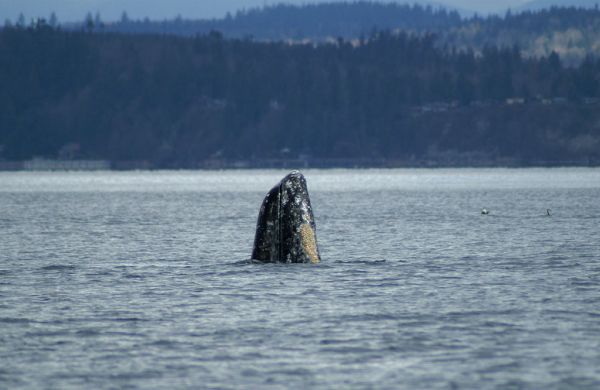
Gray Whale, taken in Langley, Washington Photograph by Minette Layne. Some rights reserved. (view image details) 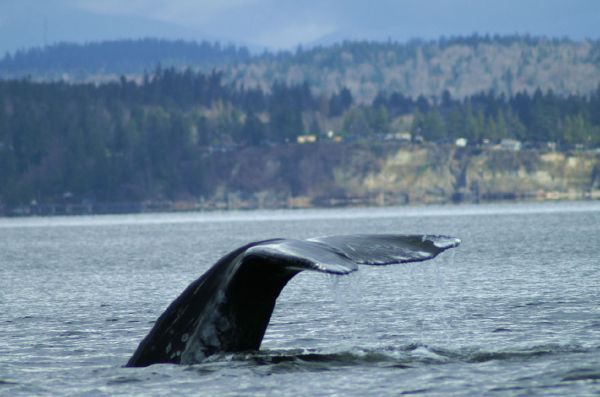
Gray Whale tail, taken in Langley, Washington Photograph by Minette Layne. Some rights reserved. (view image details)
GRAY WHALE FACTS
DescriptionThe Gray Whale is dark gray in color. Scattered patches of barnacles and orange whale lice grow on the skin. These parasites leave greyish white scar marks when they drop off. It has two to five shallow furrows on the underside of the throat. The Gray Whale does not have a dorsal fin, but has a low hump topped with 6 to 12 knuckles or bumps. They have 130-180 fringed baleen plates hanging from each side of the upper jaw. The plates are about 50cm long and are used to filter food from the water. Other Names California Gray Whale, Korean Gray Whale Size Length: males 11 -14m ; females 12 - 15m Environment coastal and open waters Food Gray whales are bottom feeders. They roll to one side and scour and siphon the bottom for tiny crustaceans. They have small, thick, widely-placed baleen plates for screening food from the water. Breeding A single calf is born after a gestation period of 12-13 months. The calf weighs 500-680kg at birth and is about 4.5m - 5m long, and is weaned after 7-8 months. The calves are born in the shallows off Baja California Range found only in the North Pacific. They migrate north along the West Coast for the summer, and south again for the winter to breed. Notes Gray Whales make the longest journey of any mammal traveling about 16,000km - 22,000km round trip every year from feeding grounds in North Pacific to breeding waters around Baja California. Killer whales are the only known predators of Gray Whales. Conservation Status LR|cd Classification
Home | Mammals | Reptiles | Birds | Insects | Privacy Policy | Disclaimer | Contact Us |