Wildlife North America . com North American Animals - mamals, birds, reptiles, insects |
Humpback Whale (Megaptera novaeangliae)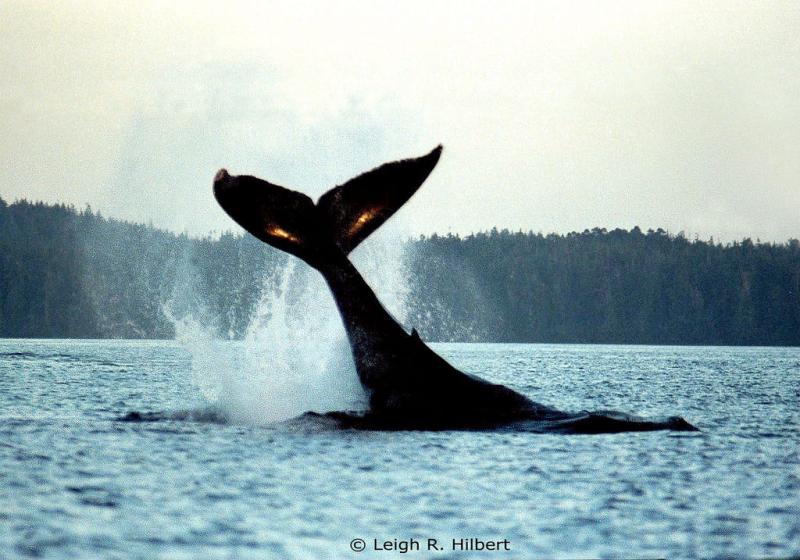
Humpback Whale tail slap. Photographed on Pacific west coast of Canada Photograph by Leigh R Hilbert. Some rights reserved. (view image details) 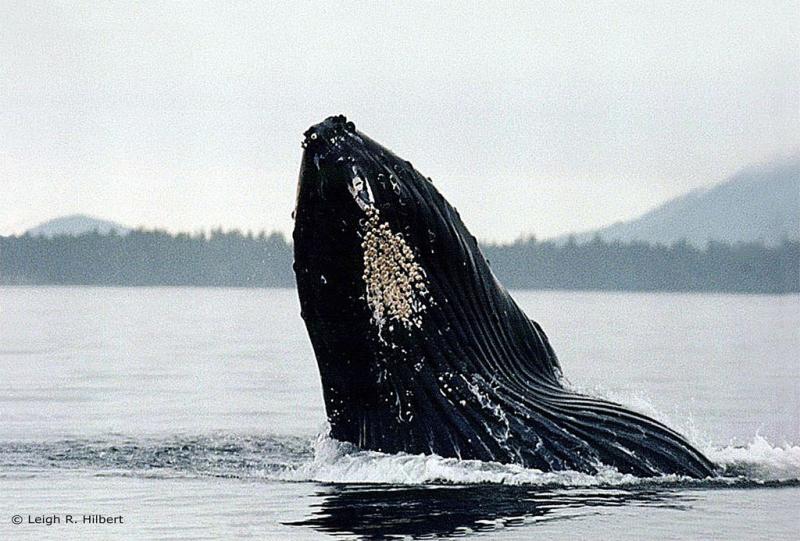
Humpback Whale feeding on schools of pilchards, Canada Photograph by Leigh R Hilbert. Some rights reserved. (view image details) 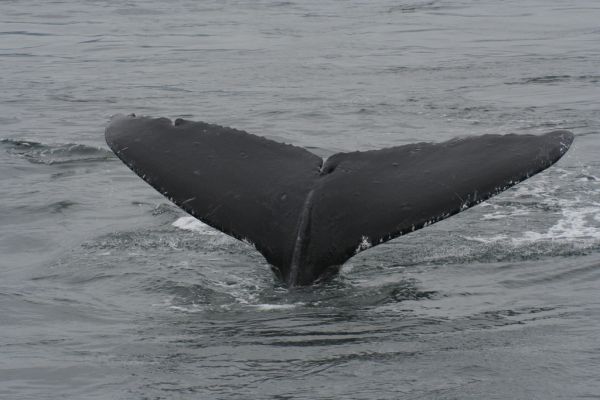
Humpback tail fluke, Alaska Photograph by Tony Hisgett. Some rights reserved. (view image details) 
Humpback Whale breaching. Photograph by Zoran Kovacevic. Some rights reserved. (view image details)
HUMPBACK WHALE FACTS
DescriptionThe Humpback Whale has a dark grey or black body, with white markings on its underside. The black and white markings are unique and can be used to identify individual animals. They have long pectoral fins with bumps on the leading edges. It has narrow head covered in protuberances (bumps), and often has barnacles attached to head and fins. It has a very small dorsal fin far down its back. Size Adults are 14m to 18m. The calves are 4m to 5m at birth Environment Polar to tropical oceans. During migration, they are also found in coastal waters. Food Humpback do not have teeth. They feed by filtering krill (kind of shrimp) between baleen plates attached to the top jaw. They have 300-400 of these baleen plates. They also eat small schooling fish caught by opening their mouths and lunging into the school of fish. Breeding Gestation period is about 11 months. Females have a calf every 2-3 years, and the calf is weaned after 11 months. The young reach maturity at about 12-15 years and can start breeding after about 7 years. Range polar and tropical waters of the Atlantic, Arctic, and Pacific Oceans. Their range also includes the waters of the Bering Sea and the waters surrounding Antarctica. Conservation Status The conservation status in the 2004 IUCN Red List of Threatened Animals is "vulnerable". Classification
Home | Mammals | Reptiles | Birds | Insects | Privacy Policy | Disclaimer | Contact Us |