Wildlife North America . com North American Animals - mamals, birds, reptiles, insects |
Muskrat (Ondatra zibethicus)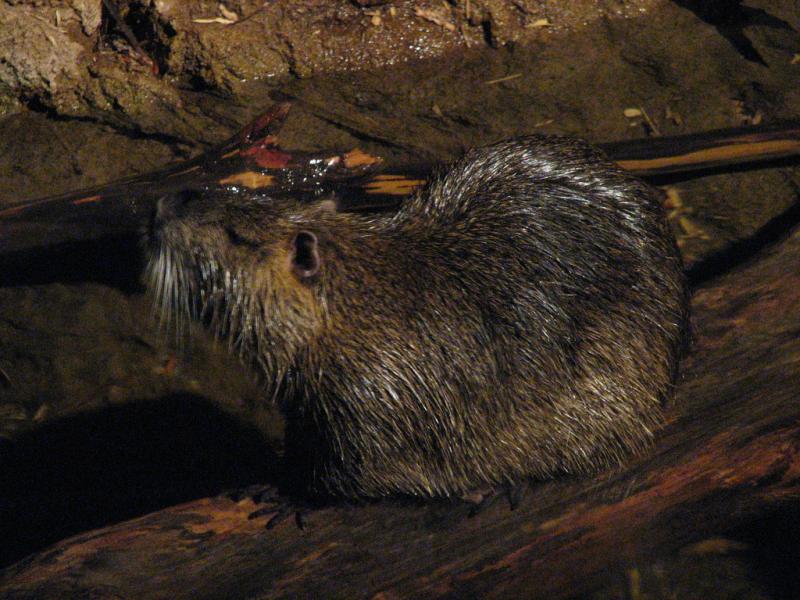
Muskrat photographed at Henry Doorly Zoo, Omaha, Nebraska Photograph by Josh More. Some rights reserved. (view image details) 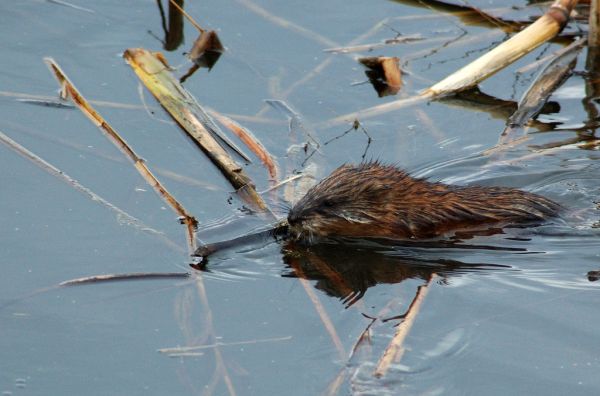
Muskrat Photograph by dobak. Some rights reserved. (view image details) 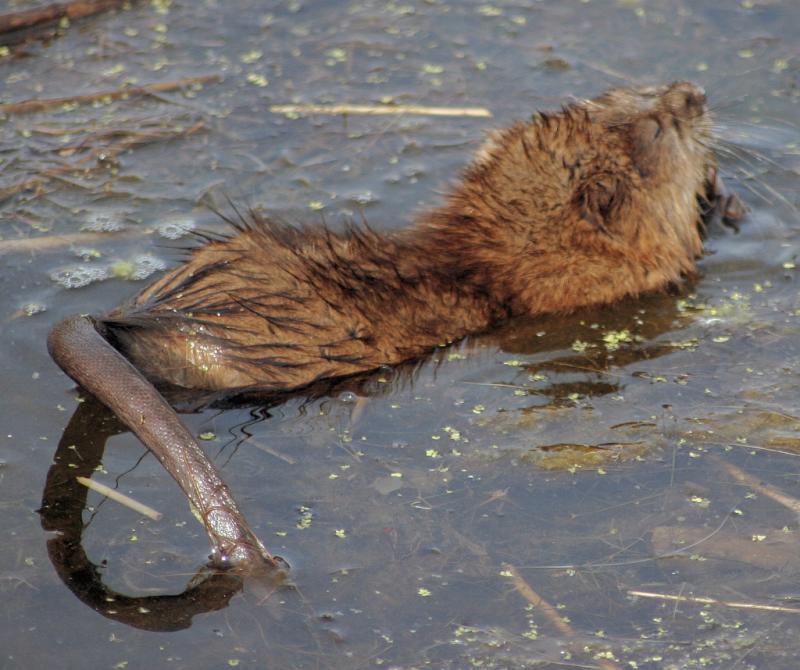
Muskrat, Cape May County, New Jersey Photograph by Diane Hamilton. Some rights reserved. (view image details)
MUSKRAT FACTS
DescriptionMuskrats secrete a scent from their glands called musk. They have large, robust bodies with a flat scaly tail. The body is glossy dark brown and darker in winter and paler in the summer The fur is very dense for insulation. Muskrats have a large head and small ears that can hardly be seen underneath the fur. They have short legs and the large back feet are partly webbed. Muskrats are good swimmers and can stay underwater for up to 15 minutes Size Length: 41cm - 62cm. Tail length: 18cm - 24cm. Weight: 0.7kg - 1.8kg. Environment swamps, marshes, and wetlands. They prefer marshes where they make burrows in banks. Thy make nests from piles of vegetation on top of a solid base like a tree stump in water 0.5m - 1m deep. Food mainly plants, but also eat some small animals Breeding A litter of around six young is born in a grass-lined nest after a gestation period of 29 - 30 days. The young have short dark fur at birth and their eyes are closed. They can swim after about 10 days and are fully weaned after 3 - 4 weeks. Range from the near arctic tundra in northern Canada to the Gulf coast and Mexican border Notes Muskrats are hunted for their fur. Classification
Home | Mammals | Reptiles | Birds | Insects | Privacy Policy | Disclaimer | Contact Us |