Wildlife North America . com North American Animals - mamals, birds, reptiles, insects |
Walrus (Odobenus rosmarus)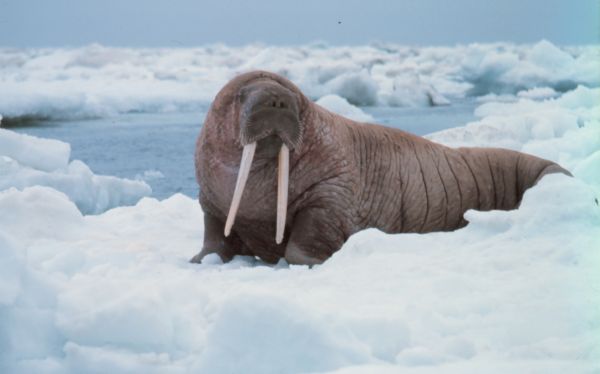
Large walrus on the ice, Alaska, Bering Sea Photograph by Captain Budd Christman, NOAA Corps. License: Public Domain. (view image details) 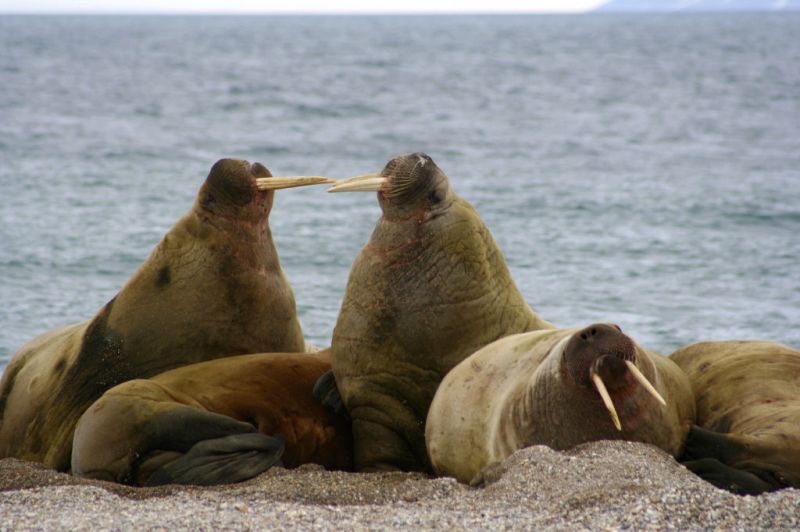
Walruses at Torellneset, Svalbard, Norway Photograph by Amanda Graham. Some rights reserved. (view image details) 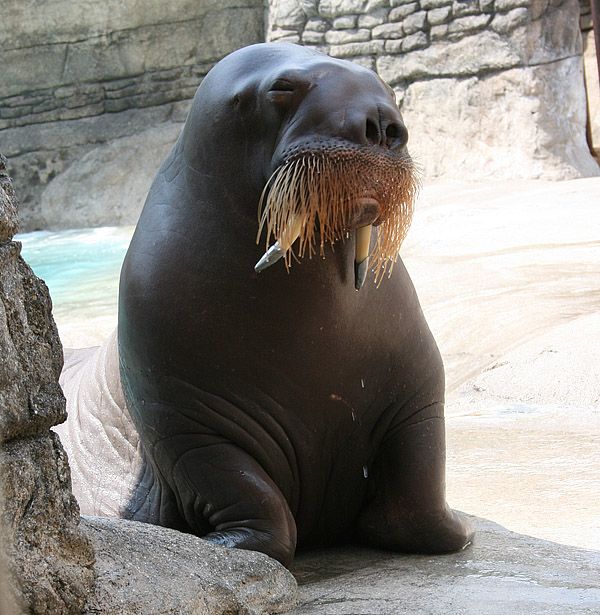
Walrus at Indianapolis Zoo. Note the caps on his tusks. Photograph by Eli Duke. Some rights reserved. (view image details) 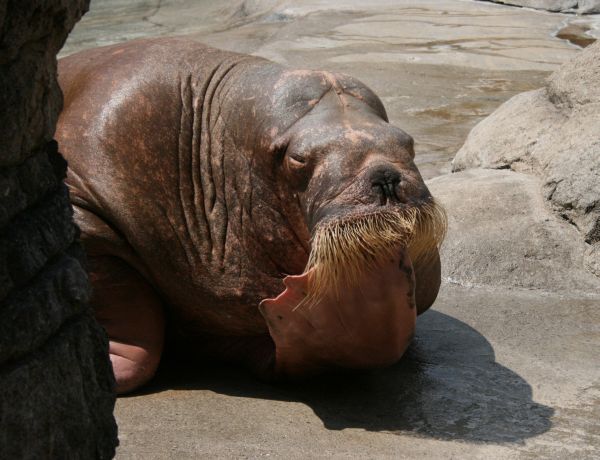
Walrus at Indianapolis Zoo. When they bask in the sun their skin takes a reddish hue, because of increased blood flow. Photograph by Eli Duke. Some rights reserved. (view image details)
WALRUS FACTS
DescriptionBoth males and females have two long tusks about 50cm long. The males have longer tusks. They have a beard of stiff bristles that grow to 30cm long. These are replaced every year. Their bodies are covered with short coarse hair, although they appear to be bald. Walruses have no external ears and small eyes. When they come onto land or ice floes, they often congregate in herds of up to several thousand. Calves are gray in color. Size Length: males 3m, females 2.6m Environment ice floes near shallower regions of the Arctic coast. They feed at depths of less than 100m Food mussels, snails, echinoderms, and crabs Breeding Females give birth to a single calf after gestation of 15-16 months. At birth the calf is about 110 cm long and weighs approximately 63 kg. It is weaned fully after 2 years. Calves can swim at birth. Range all around the polar regions of the arctic Classification
Home | Mammals | Reptiles | Birds | Insects | Privacy Policy | Disclaimer | Contact Us |