Wildlife North America . com North American Animals - mamals, birds, reptiles, insects |
Green Turtle (Chelonia mydas)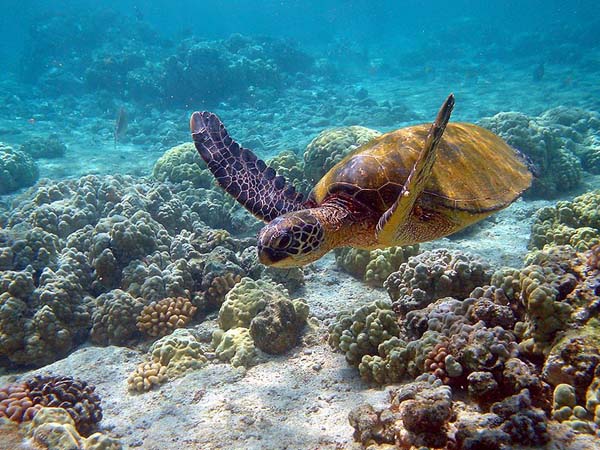
Green turtle, Hawaii, USA Photograph by Mila Zinkova. Some rights reserved. (view image details) 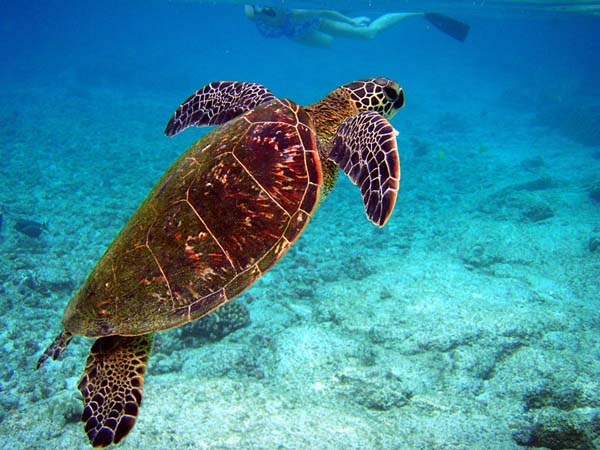
Green turtle, Hawaii, USA Photograph by Mila Zinkova. Some rights reserved. (view image details)
GREEN TURTLE FACTS
DescriptionThe Green Turtle has a small head and strong paddle-shaped front flippers. It gets its name from the colour of its fat rather than the colour of its shell. Males are larger than females with longer tail extending well beyond the shell. The carapace can varies from olive to brown, and is sometimes black, Size 45-120 cm Environment Coastal waters, sea grass, oceans, coral reefs Food sea grasses, seaweeds and mangrove fruits Breeding The females only come to land to lay eggs on a sandy beach, where they dig a hole and lay about 100 eggs and then cover them with sand. Once hatchlings (baby turtles) reach the sea, only the females will ever return to the land again when they come to lay their eggs as adults. Range Tropical and subtropical areas of the Indo-Pacific region. Conservation Status The conservation status in the 2004 IUCN Red List of Threatened Animals is "endangered". Classification
Home | Mammals | Reptiles | Birds | Insects | Privacy Policy | Disclaimer | Contact Us |