Wildlife North America . com North American Animals - mamals, birds, reptiles, insects |
|
| |
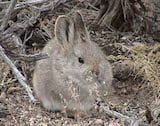 |
Pygmy Rabbit (Brachylagus idahoensis) Read more > |
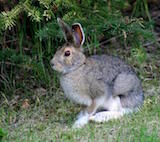 |
Snowshoe Hare (Lepus americanus) Snowshoe hares have dense furred feet including the soles, to help them cope with the cold snowy winters - hence their name. In summer they have grizzled rust brown or grayish brown fur with dark line down the back, and... Read more > |
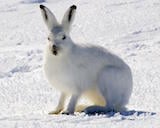 |
Arctic Hare (Lepus arcticus) Arctic hares are white with black ear-tips in winter. In summer their color varies with location - hares from the tundra are blue-gray, and those from Ellesmere Island and Greenland are almost white. The underfur is... Read more > |
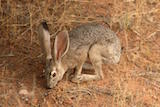 |
Black-tailed Jackrabbit (Lepus californicus) Black-tailed jackrabbits are hares with very long ears and long lanky legs. The fur is dark brown flecked with black, and has a black stripe down the center of the back and a black rump patch. The underside of the body... Read more > |
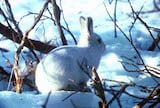 |
Alaskan Hare (Lepus othus) Read more > |
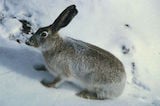 |
White-tailed Jackrabbit (Lepus townsendii) The White-tailed Jackrabbit is large hare with enormous ears. The fur color varies with season and habitat. In summer, the fur is yellowish brown to grayish brown in colour, with white or grey on the underside. The... Read more > |
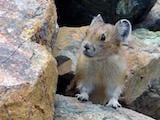 |
American Pika (Ochotona princeps) American Pikas communicate with each other using both short alarm calls, and longer vocalizations. They also mark territory with scent from their cheek glands. The Pika is brown above with buff colored underside. The... Read more > |
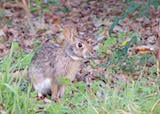 |
Swamp Rabbit (Sylvilagus aquaticus) The Swamp Rabbit is the largest North American cottontail. The fur is brown on top and white underneath. The underside of the tail is white, giving it the common name of cottontail. The fur is short and ears are of... Read more > |
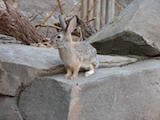 |
Desert Cottontail (Sylvilagus audubonii) Desert Cottontails are able to tolerate diverse habitat from hot desert to woodland at 2000m. These brown rabbits are most active at dawn and dusk, and spend the heat of the day in their burrow. The tail is a bushy... Read more > |
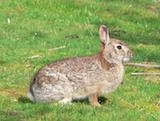 |
Brush Rabbit (Sylvilagus bachmani) Brush Rabbits are small cottontail rabbits. The fur is brownish in appearance with individual hairs of gray, black and reddish brown. The ears are fairly small. The small tail is brown above and white underneath. These... Read more > |
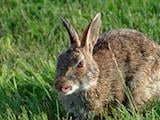 |
Eastern Cottontail (Sylvilagus floridanus) Eastern cottontails are prolific rabbits and can have up to seven litters a year. They have dense gray fur with longer black-tipped outer hairs (guard hairs). It has a prominent reddish patch on the neck. The underside... Read more > |
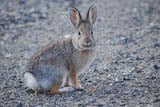 |
Mountain Cottontail (Sylvilagus nuttallii) Read more > |
 |
Appalachian Cottontail (Sylvilagus obscurus) Read more > |
 |
Marsh Rabbit (Sylvilagus palustris) Marsh rabbits are semi-aquatic and good swimmers, and they sometimes hide in water to avoid danger. The fur is dark brown fur above with cinnamon color on back of the neck; the underside is white. The ears are broad and... Read more > |
 |
New England Cottontail (Sylvilagus transitionalis) The New England Cottontail is very similar to the Eastern Cottontail, and it is very difficult to tell them apart by looking at them. The fur is gray brown above with white underside and white tail. The New England... Read more > |
|
Home | Mammals | Reptiles | Birds | Insects | Privacy Policy | Disclaimer | Contact Us |